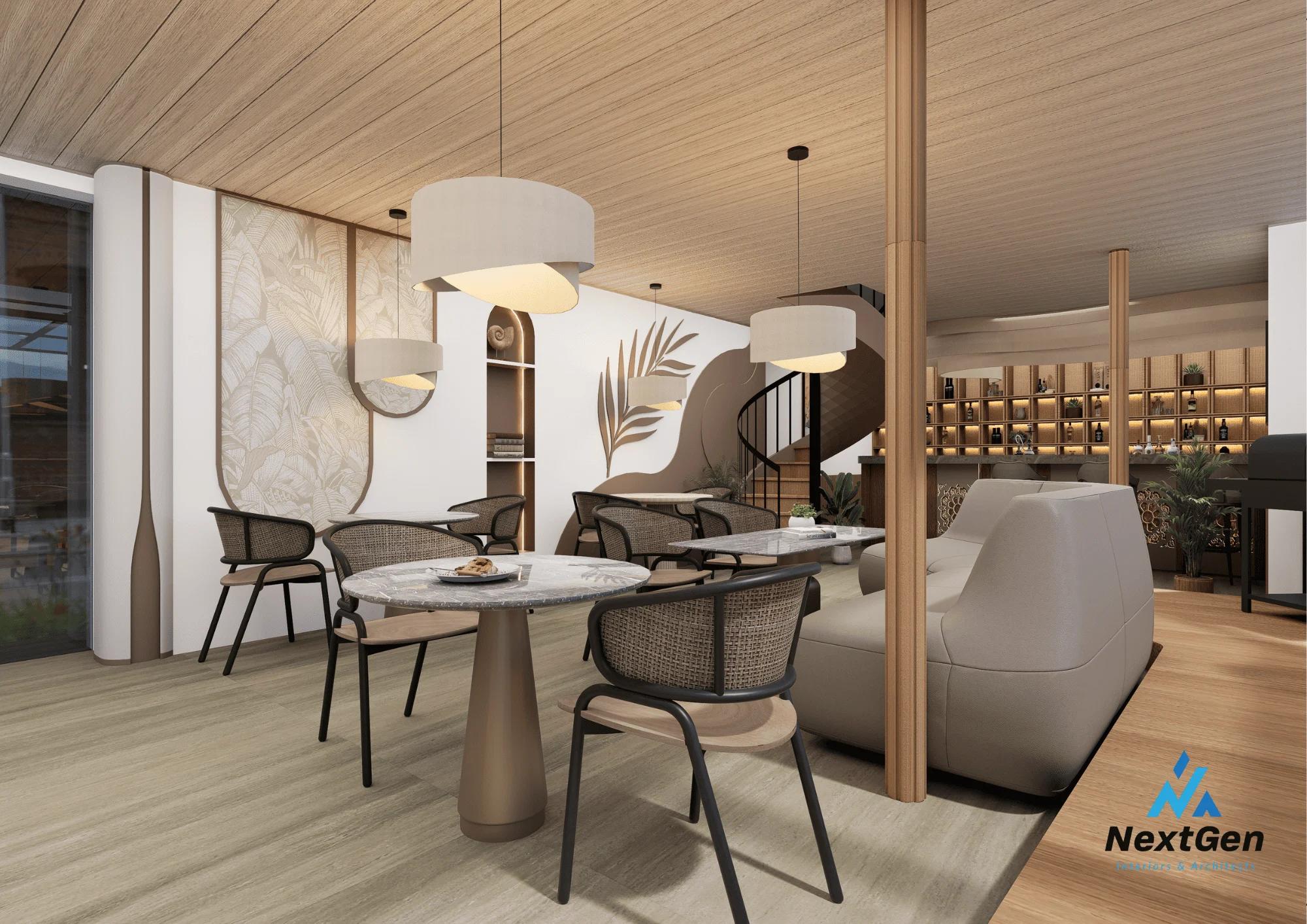
Build Hospitality Spaces That Inspire Guests and Drive Business Growth
The success of a hotel or resort starts long before the first guest checks in. It begins with thoughtful architecture, intelligent planning, and a deep understanding of how people experience spaces. Every entrance, guest room, restaurant, lobby, spa, landscape, and circulation path contributes to the overall guest experience.
At NextGen Interiors, we specialize in hotel and resort architecture in Nepal, helping investors, hotel owners, hospitality brands, and developers transform ideas into successful hospitality destinations. Whether you are planning a luxury mountain resort, a boutique hotel in Kathmandu, a wellness retreat in Pokhara, or a business hotel in a growing commercial city, our architecture and design team delivers functional, aesthetically refined, and commercially viable solutions.
Unlike conventional architectural projects, hospitality developments require balancing guest comfort, operational efficiency, sustainability, branding, local culture, and long-term profitability. Our multidisciplinary approach combines architecture, interior design, landscape planning, and hospitality consulting to create spaces that are memorable for guests and efficient for operators.
01WHY HOTEL & RESORT ARCHITECTURE MATTERS
Hospitality architecture is far more than designing an attractive building. Every design decision influences guest satisfaction, operational costs, staff productivity, maintenance requirements, and the long-term value of the property.
A successful hotel should:
- Create a memorable first impression
- Provide intuitive guest circulation
- Maximize room efficiency
- Enhance natural lighting
- Improve operational workflow
- Reduce maintenance costs
- Increase occupancy potential
- Strengthen the hotel's brand identity
Similarly, a successful resort should connect architecture with nature. Rather than competing with the surrounding landscape, the buildings should complement mountains, rivers, forests, or lakes while creating immersive guest experiences.
Thoughtful hospitality architecture also considers seasonal climate, energy efficiency, local materials, accessibility, fire safety, and future expansion opportunities.
02OUR HOTEL ARCHITECTURE SERVICES IN NEPAL
As a leading hotel architect in Nepal, NextGen Interiors provides comprehensive architectural solutions from concept development to construction documentation.
Our services include:
- Hotel Architecture Design
- Hotel Master Planning
- Site Analysis
- Concept Development
- Architectural Drawings
- Hotel Floor Planning
- Guest Room Planning
- Lobby Design Planning
- Restaurant Planning
- Banquet Hall Design
- Conference Hall Layout
- Commercial Kitchen Planning
- Service Area Planning
- Rooftop Hospitality Spaces
- Landscape Coordination
- Parking Planning
- Sustainable Building Design
- Construction Documentation
Whether you are developing a boutique hotel with 20 rooms or a luxury hospitality complex with hundreds of guest accommodations, every project receives the same attention to detail and strategic planning.
03RESORT ARCHITECTURE IN NEPAL
Nepal offers unique opportunities for hospitality investment. From Himalayan viewpoints to lakeside destinations and eco-tourism hubs, resorts require architecture that embraces the surrounding environment.
Our resort architecture services include:
- Luxury Resort Design
- Eco Resort Planning
- Wellness Retreat Architecture
- Boutique Resort Design
- Hill Resort Planning
- Riverside Resort Design
- Mountain Resort Development
- Resort Villas
- Clubhouse Design
- Spa Buildings
- Infinity Pool Design Integration
- Outdoor Dining Spaces
- Event Spaces
- Adventure Resort Planning
- Resort Landscape Coordination
Every resort begins with understanding the land. Instead of forcing a standard layout onto a site, we analyze topography, views, sunlight, wind direction, drainage, access roads, and vegetation to develop a design that feels natural and timeless.
04HOSPITALITY ARCHITECTURE: DESIGNING EXPERIENCES, NOT JUST BUILDINGS
Hospitality architecture differs from residential and commercial architecture because every space contributes to the guest journey.
The arrival sequence, reception experience, lighting, room layout, dining atmosphere, outdoor views, and recreational facilities work together to create lasting memories.
Our hospitality architecture process focuses on:
Guest Experience
Guests should move effortlessly from arrival to departure without confusion. Clear circulation, welcoming entrances, and intuitive wayfinding enhance comfort and convenience.
Operational Efficiency
Behind every successful hotel is an efficient operational system. Service corridors, housekeeping access, laundry logistics, storage areas, kitchens, and maintenance facilities are carefully planned to reduce operational costs.
Brand Identity
Every hospitality brand has its own personality. A luxury mountain resort, urban business hotel, wellness retreat, or boutique heritage hotel requires a distinct architectural language that reflects its target audience and market positioning.
Sustainability
Sustainable architecture is increasingly important in hospitality. Energy-efficient buildings reduce operational expenses while appealing to environmentally conscious travelers.
05HOTEL CONSTRUCTION DESIGN PROCESS
Our design process follows a structured methodology that minimizes risks and maximizes project success.
1. Project Consultation
We begin by understanding your vision, investment goals, target market, and operational requirements.
Topics include:
- Hotel category
- Number of rooms
- Target guests
- Budget
- Brand positioning
- Future expansion plans
2. Site Analysis
Before designing begins, our architects evaluate:
- Site orientation
- Topography
- Access roads
- Views
- Climate
- Existing utilities
- Local regulations
- Environmental considerations
Proper site planning often determines the long-term success of a hospitality project.
3. Concept Development
Based on research and analysis, we create conceptual architectural ideas that balance aesthetics, functionality, and commercial viability.
This stage includes:
- Mood boards
- Massing studies
- Preliminary layouts
- Spatial zoning
- Concept sketches
- Design direction
4. Master Planning
Large hospitality developments require strategic master planning.
Our resort master planning services include:
- Land use planning
- Guest circulation
- Service circulation
- Villa placement
- Recreational zones
- Water features
- Parking
- Future expansion
- Utility infrastructure
- Landscape integration
An effective master plan ensures that every component works together as one cohesive destination rather than separate buildings.
06HOTEL FLOOR PLANNING
Efficient hotel planning improves both guest comfort and operational performance.
We carefully design:
- Standard Rooms
- Deluxe Rooms
- Suites
- Family Rooms
- Presidential Suites
- Accessible Rooms
- Connecting Rooms
Common spaces include:
- Reception
- Lobby
- Lounge
- Restaurants
- Meeting Rooms
- Conference Facilities
- Business Centers
- Gyms
- Spas
- Swimming Pools
- Rooftop Spaces
- Outdoor Courtyards
Each space is proportioned to maximize usability while maintaining a luxurious guest experience.
07RESORT MASTER PLANNING
Resort developments often span large areas, making master planning one of the most critical phases of the project.
Our master planning strategy considers:
- Arrival experience
- View corridors
- Privacy between villas
- Walking trails
- Natural landscaping
- Water management
- Sustainability
- Recreational activities
- Emergency access
- Future expansion opportunities
A well-designed master plan creates harmony between architecture and nature while supporting efficient operations.
08LUXURY HOTEL & RESORT ARCHITECTURE
Luxury hospitality is defined not by excessive decoration but by thoughtful design, comfort, craftsmanship, and attention to detail.
Our luxury hospitality projects emphasize:
- Grand arrival experiences
- Elegant architectural forms
- Premium materials
- Spacious public areas
- Natural light
- Seamless indoor-outdoor connections
- High-quality finishes
- Custom-designed interiors
- Smart technology integration
- Wellness-focused amenities
09SUSTAINABLE HOTEL & RESORT ARCHITECTURE
Sustainability has become one of the most important considerations in modern hospitality architecture. Today's travelers increasingly prefer accommodations that minimize environmental impact while maintaining exceptional comfort and luxury. For hotel owners, sustainable design also reduces operational costs through improved energy efficiency, water conservation, and lower maintenance requirements.
At NextGen Interiors, we incorporate sustainable architecture principles from the earliest planning stages rather than treating them as afterthoughts.
Passive Design Strategies
Passive architectural design leverages the local climate to reduce dependence on mechanical systems. In Nepal's diverse geography—from the Terai plains to the Himalayan foothills—this means carefully considering:
- Building orientation for optimal daylight
- Cross ventilation for natural cooling
- Solar heat management
- Thermal insulation
- Roof overhangs for shading
- Courtyard planning
- Natural airflow optimization
Energy-Efficient Building Systems
Modern hospitality buildings benefit from technologies such as:
- LED lighting systems
- Smart building controls
- Motion sensor lighting
- High-performance glazing
- Solar photovoltaic integration
- Solar water heating
- Energy-efficient HVAC systems
- Building automation systems
Water Conservation
Hotels and resorts consume significant amounts of water daily. Our architectural planning includes:
- Rainwater harvesting
- Greywater recycling
- Efficient plumbing layouts
- Low-flow fixtures
- Smart irrigation systems
- Native landscaping
- Stormwater management
Local Materials and Craftsmanship
Nepal possesses a rich tradition of architecture and craftsmanship. Incorporating locally sourced stone, timber, brick, and handcrafted finishes creates authentic hospitality experiences while reducing transportation costs and supporting local communities.
Rather than copying international design trends, we believe hospitality architecture should celebrate Nepal's cultural identity through carefully selected materials, textures, and architectural details.
10BOUTIQUE HOTEL ARCHITECTURE
Boutique hotels have experienced remarkable growth because travelers increasingly seek unique, personalized experiences instead of standardized accommodations.
Unlike large chain hotels, boutique hotels typically feature:
- Distinct architectural identity
- Strong local character
- Customized guest experiences
- Smaller room inventory
- Premium interior detailing
- Curated public spaces
- High-quality craftsmanship
Creating a Memorable First Impression
Guests often form lasting impressions within the first few minutes of arrival. We design welcoming arrival sequences that include:
- Elegant entrances
- Landscaped drop-off areas
- Feature lighting
- Signature reception spaces
- Comfortable waiting lounges
- Strong visual connections to surrounding landscapes
Personalized Guest Rooms
Boutique hotels emphasize individuality rather than repetition.
Our guest room planning focuses on:
- Functional layouts
- Premium finishes
- Flexible furniture
- Excellent acoustics
- Natural lighting
- Mountain or landscape views
- Comfortable workspaces
- Luxury bathrooms
Every room should feel thoughtfully designed while remaining operationally efficient.
11LUXURY HOTEL ARCHITECTURE
Luxury architecture is not defined solely by expensive materials or grand scale. True luxury results from careful planning, exceptional detailing, and seamless guest experiences.
Grand Public Spaces
Public areas should feel spacious, elegant, and welcoming. These include:
- Double-height lobbies
- Feature staircases
- Indoor gardens
- Water elements
- Premium lounges
- Fine dining restaurants
- Executive meeting spaces
High-End Guest Accommodation
Luxury accommodations often include:
- Suites
- Villas
- Private terraces
- Outdoor bathtubs
- Infinity pools
- Butler service areas
- Walk-in wardrobes
- Spa-inspired bathrooms
Wellness-Focused Design
Modern luxury increasingly emphasizes wellness. Architectural planning may include:
- Spa facilities
- Yoga studios
- Meditation gardens
- Fitness centers
- Thermal therapy spaces
- Outdoor relaxation zones
- Healthy dining environments
12RESORT MASTER PLANNING: CREATING COMPLETE DESTINATIONS
A successful resort is more than a collection of buildings. It is a carefully orchestrated destination where every element works together to create memorable experiences.
Site Zoning
We organize land into functional zones such as:
- Arrival area
- Accommodation zone
- Recreational facilities
- Dining areas
- Event spaces
- Service facilities
- Staff accommodation
- Parking
- Utility infrastructure
Circulation Planning
Guest circulation and service circulation should remain largely independent. We carefully design:
- Arrival routes
- Pedestrian pathways
- Service roads
- Emergency access
- Golf cart circulation
- Universal accessibility
View Optimization
Resorts in Nepal often enjoy spectacular landscapes. Building placement considers:
- Mountain views
- Lakes
- Rivers
- Forests
- Sunrise and sunset orientations
- Privacy between villas
- Wind direction
Every guest deserves a memorable view.
13HOTEL RENOVATION & EXPANSION
Many existing hotels require modernization to remain competitive. Rather than demolishing existing buildings, renovation often offers a cost-effective solution that preserves valuable infrastructure while improving guest satisfaction.
Our renovation services include:
- Property assessment
- Structural evaluation
- Space reconfiguration
- Guest room upgrades
- Lobby transformation
- Restaurant renovation
- Lighting improvements
- Accessibility upgrades
- Energy efficiency improvements
- Facade modernization
When planned correctly, renovation can significantly increase occupancy rates and average daily room revenue.
14SMART HOSPITALITY BUILDINGS
Technology is transforming hospitality architecture. We integrate infrastructure that supports:
- Smart room controls
- Digital check-in
- Mobile key systems
- Energy monitoring
- Occupancy sensors
- Building automation
- Security integration
- High-speed connectivity
- Digital signage
- EV charging infrastructure
By planning these systems during the architectural phase, hotels avoid costly retrofits later.
15WHY CHOOSE NEXTGEN INTERIORS?
Selecting the right architectural partner is one of the most important decisions in any hospitality development. At NextGen Interiors, our approach extends beyond creating attractive buildings—we design hospitality environments that support operational efficiency, enhance guest experiences, and strengthen long-term business performance.
Our team combines expertise in architecture, interior design, space planning, and hospitality-focused design strategies. This integrated perspective ensures that every project balances aesthetics, functionality, and commercial objectives.
Our Approach
We believe successful hospitality projects begin with understanding your vision and business goals. Every design decision is informed by:
- The target guest profile
- Brand positioning
- Site characteristics
- Operational workflow
- Budget considerations
- Future scalability
- Sustainability objectives
What You Can Expect
When working with NextGen Interiors, clients benefit from:
- Comprehensive architectural planning
- Hospitality-focused design expertise
- Coordinated architecture and interiors
- Practical, buildable solutions
- Attention to detail throughout the design process
- Clear communication from concept to completion
Whether you are developing a boutique hotel, luxury resort, wellness retreat, or expanding an existing hospitality property, our goal is to create spaces that deliver lasting value for both owners and guests.
Contact NextGen Interiors & Architects — call +977 9849151220 or email info@nextgeninterior.com.